Most self-help books are one usable idea padded to 250 pages. You read chapter three, get the point, and then watch the author restate it eleven more times with different anecdotes.
The books below are the ones that survive that test. Some of them changed how millions of people behave. A couple have aged badly in ways nobody mentions. I’ve said so where that’s true, because a list where every book is life-changing is an advertisement rather than a recommendation.
Twenty-five books, ranked, with what each one actually says and who should skip it.
Disclosure: This post contains Amazon affiliate links. If you buy through them, I earn a small commission at no extra cost to you.
Table of Contents
How I picked these books
Three filters, applied in order.
It still gets recommended. A book published in 1936 that people are still pressing on their friends in 2026 has proven something a bestseller from last spring hasn’t. Longevity filters out the books that sold on marketing.
It says something the others don’t. The self-help genre recycles heavily. Half the habit books published since 2018 are Atomic Habits with the serial numbers filed off. I’ve kept the originals and dropped the copies.
It produces behavior, not just feelings. Plenty of books make you feel motivated for three days. Fewer give you something you can do on Tuesday morning. I weighted heavily toward the second kind.
I cross-referenced Goodreads ratings, sales data, Wikipedia’s list of self-help books, and what actually comes up repeatedly in communities like r/BettermentBookClub and r/getdisciplined. Then I applied my own reading, which is where the criticisms come from.
All 25 books at a glance
| # | Book | Author | Year | Category | Goodreads |
|---|---|---|---|---|---|
| 1 | Atomic Habits | James Clear | 2018 | Habits | 4.35 |
| 2 | Man’s Search for Meaning | Viktor Frankl | 1946 | Meaning | 4.37 |
| 3 | How to Win Friends and Influence People | Dale Carnegie | 1936 | Social skills | 4.22 |
| 4 | Meditations | Marcus Aurelius | c. 180 AD | Philosophy | 4.28 |
| 5 | The 7 Habits of Highly Effective People | Stephen Covey | 1989 | Frameworks | 4.16 |
| 6 | Feeling Good | David Burns | 1980 | Mental health | 4.06 |
| 7 | Deep Work | Cal Newport | 2016 | Productivity | 4.19 |
| 8 | Mindset | Carol Dweck | 2006 | Psychology | 4.09 |
| 9 | Thinking, Fast and Slow | Daniel Kahneman | 2011 | Decision-making | 4.17 |
| 10 | The Power of Now | Eckhart Tolle | 1997 | Spirituality | 4.15 |
| 11 | The Subtle Art of Not Giving a F*ck | Mark Manson | 2016 | Mindset | 3.95 |
| 12 | Daring Greatly | Brené Brown | 2012 | Vulnerability | 4.15 |
| 13 | Getting Things Done | David Allen | 2001 | Productivity | 4.02 |
| 14 | The War of Art | Steven Pressfield | 2002 | Creativity | 4.15 |
| 15 | Quiet | Susan Cain | 2012 | Temperament | 4.11 |
| 16 | The Body Keeps the Score | Bessel van der Kolk | 2014 | Trauma | 4.28 |
| 17 | Essentialism | Greg McKeown | 2014 | Focus | 4.09 |
| 18 | Four Thousand Weeks | Oliver Burkeman | 2021 | Time / mortality | 4.31 |
| 19 | Nonviolent Communication | Marshall Rosenberg | 1999 | Communication | 4.18 |
| 20 | Can’t Hurt Me | David Goggins | 2018 | Discipline | 4.55 |
| 21 | Grit | Angela Duckworth | 2016 | Achievement | 4.03 |
| 22 | The Almanack of Naval Ravikant | Eric Jorgenson | 2020 | Wealth / wisdom | 4.31 |
| 23 | Mindfulness in Plain English | Bhante Gunaratana | 1992 | Meditation | 4.31 |
| 24 | So Good They Can’t Ignore You | Cal Newport | 2012 | Career | 4.09 |
| 25 | Tiny Habits | BJ Fogg | 2019 | Habits | 4.08 |
The top 10 best self-improvement books of all time
1. Atomic Habits by James Clear (2018)
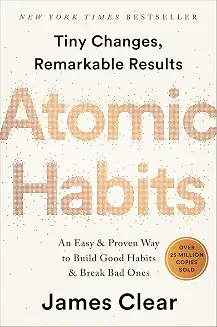
The argument: You don’t rise to the level of your goals. You fall to the level of your systems. Behavior change fails because people rely on motivation instead of designing the environment and the identity around the habit.
The idea worth stealing: Habit stacking, which means attaching a new behavior to an existing one. “After I pour my coffee, I write one sentence.” The existing habit becomes the trigger, so you stop depending on remembering.
Who it’s for: Anyone who has repeatedly started something and quit. It’s the most practically useful book on this list and the one I’d hand to someone who’s only going to read one.
Who should skip it: If you’ve already read The Power of Habit and Tiny Habits, you know most of this. Clear’s contribution is organization and clarity rather than new research.
The honest criticism: Clear is a synthesizer rather than a researcher, and some of the studies he cites have had a rough decade. The book works anyway because the systems advice doesn’t depend on the psychology being airtight.
2018 · 320 pages · 4.35 on Goodreads · jamesclear.com
I’ve written a longer breakdown of what works and what doesn’t in this one: full Atomic Habits review.
2. Man’s Search for Meaning by Viktor Frankl (1946)
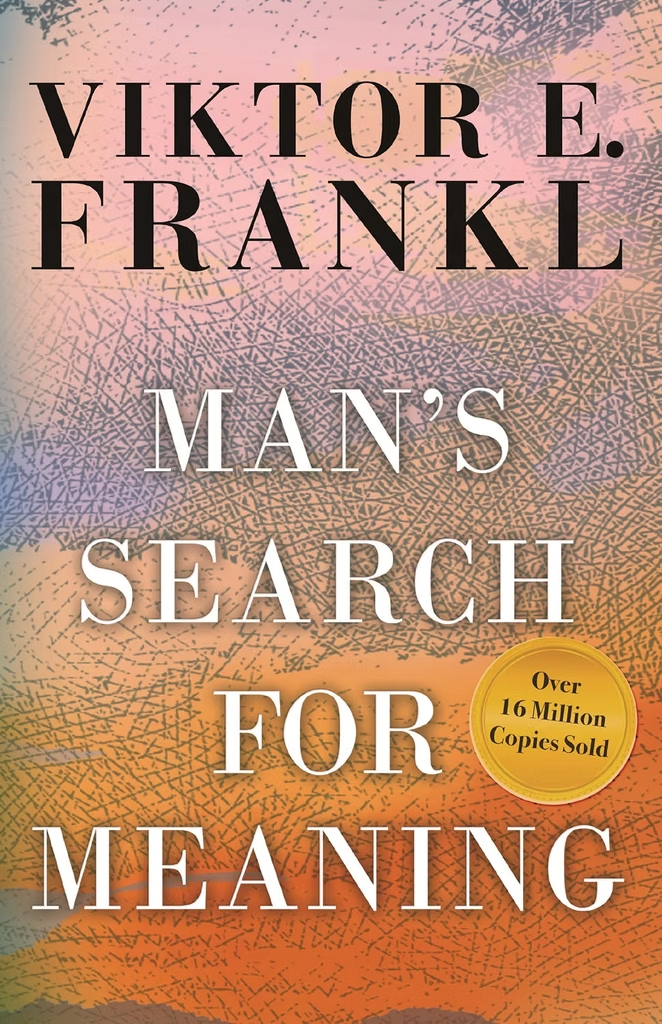
The argument: Frankl survived Auschwitz and observed who else did. His conclusion was that the people who found a reason to live survived conditions that broke people who had none. Suffering is not optional. Your response to it is.
The idea worth stealing: The space between stimulus and response. You can’t control what happens. You retain some control over what you do next, and that space is where everything else in this genre operates.
Who it’s for: Anyone going through something genuinely hard, and anyone who finds the productivity end of this genre hollow.
Who should skip it: Nobody, but know what you’re getting. The first half is a concentration camp memoir. It’s not a comfortable read.
The honest criticism: The second half, where Frankl explains logotherapy, is much drier than the memoir and reads like a clinical paper. Most readers slow down there.
1946 · 184 pages · 4.37 on Goodreads
3. How to Win Friends and Influence People by Dale Carnegie (1936)
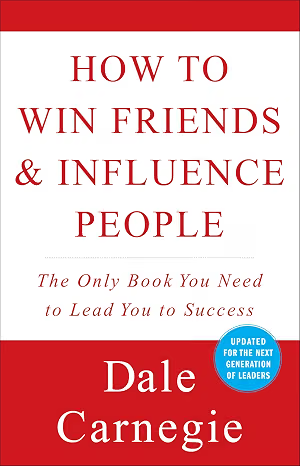
The argument: People act on self-interest and want to feel important. If you’re genuinely interested in other people instead of trying to be interesting yourself, most social friction disappears.
The idea worth stealing: Never tell someone they’re wrong directly. Ask a question that lets them arrive there. It’s manipulative-sounding and it works, because people defend positions they were told to abandon and reconsider positions they examined themselves.
Who it’s for: Anyone whose work involves persuading people. Ninety years on, nothing has replaced it.
Who should skip it: If you find American salesman optimism grating, the prose will annoy you constantly.
The honest criticism: The line between sincere interest and performed interest is thinner than Carnegie admits, and the book gets used as a manual for the performed version. Read it knowing that people can tell.
1936 · 291 pages · 4.22 on Goodreads
4. Meditations by Marcus Aurelius (c. 180 AD)
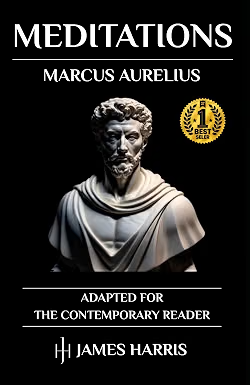
The argument: The most powerful man in the world wrote private notes reminding himself to be less irritable, less self-important, and less afraid of dying. He was never trying to publish them, which is why they read as honest.
The idea worth stealing: Separate what’s in your control from what isn’t, then stop spending energy on the second category. Almost every anxiety-management technique in modern self-help is a version of this.
Who it’s for: People who want philosophy without a system to buy into. Also the cheapest book here, because it’s public domain and free on Project Gutenberg and Standard Ebooks.
Who should skip it: It repeats itself constantly. It was a journal. Read it in small pieces rather than straight through.
The honest criticism: The modern Stoicism industry has flattened this book into productivity advice for men who lift. Marcus was writing about death and duty, not about optimizing your morning.
c. 180 AD · ~250 pages · 4.28 on Goodreads
5. The 7 Habits of Highly Effective People by Stephen Covey (1989)
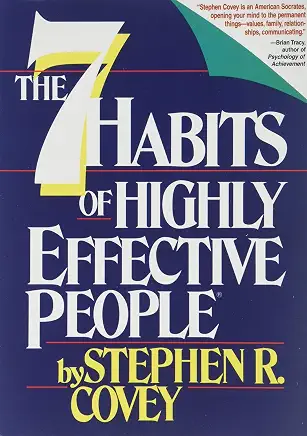
The argument: Effectiveness comes from character rather than technique. Covey organizes it into a progression from dependence to independence to interdependence, with habits attached at each stage.
The idea worth stealing: Begin with the end in mind, executed literally by writing a personal mission statement. It sounds like a corporate retreat exercise. It’s still the clearest way to notice you’ve spent five years pursuing something you don’t want.
Who it’s for: People who want a complete framework rather than a single technique.
Who should skip it: The tone is heavy. Covey writes like a management consultant because he was one.
The honest criticism: It’s longer than it needs to be by roughly a third, and the business examples have dated badly. The habits themselves have held up.
1989 · 381 pages · 4.16 on Goodreads
6. Feeling Good by David Burns (1980)
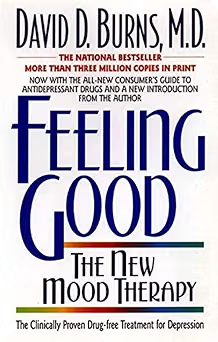
The argument: Depression and anxiety are sustained by distorted thinking patterns, and you can identify and challenge those patterns on paper without a therapist in the room.
The idea worth stealing: The thought record. Write the automatic thought, name the distortion, write a realistic alternative. It sounds mechanical and it measurably works.
Who it’s for: Anyone dealing with low mood, harsh self-criticism, or anxiety. This is the most evidence-backed book on the list. Bibliotherapy trials using it have shown real effects.
Who should skip it: If you’re in acute crisis, a book is not the intervention. Get a person.
The honest criticism: The writing is dated and occasionally corny, and the 1980 pop-psych framing puts people off. Push through it. The worksheets are the point.
1980 · 736 pages · 4.06 on Goodreads ·
7. Deep Work by Cal Newport (2016)
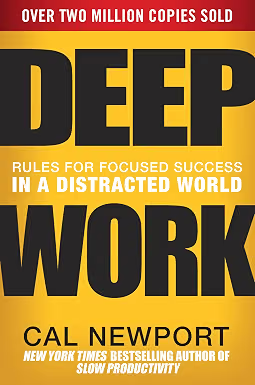
The argument: The ability to concentrate without distraction on a hard problem is becoming rare at exactly the moment it’s becoming valuable. Most knowledge work is shallow activity that feels productive.
The idea worth stealing: Schedule every hour of your workday in blocks the night before. It’s uncomfortable and it exposes how much of your day was reactive.
Who it’s for: Knowledge workers, students, writers, programmers, anyone whose output depends on thinking hard for long stretches.
Who should skip it: If your job is genuinely reactive, like support or clinical work or anything with a queue, the advice won’t fit and Newport doesn’t acknowledge that well.
The honest criticism: Newport is a tenured professor writing about the importance of controlling your calendar. The advice assumes an autonomy most people don’t have. It’s still worth reading for the parts you can apply.
2016 · 304 pages · 4.19 on Goodreads · calnewport.comBuy on Amazon
8. Mindset by Carol Dweck (2006)
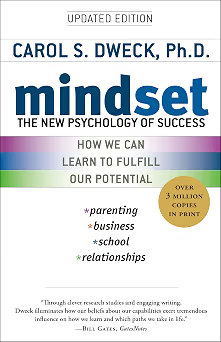
The argument: People hold either a fixed belief that ability is innate or a growth belief that ability develops. The belief shapes how they respond to difficulty, and the response shapes how far they get.
The idea worth stealing: Praise the process rather than the trait. “You worked hard on that” produces different behavior than “you’re so smart,” particularly in children.
Who it’s for: Parents, teachers, coaches, and anyone who avoids things they might be bad at.
Who should skip it: The core idea fits in a long article. The book stretches it.
The honest criticism: This matters. Large replication attempts have found growth mindset interventions produce much smaller effects than the book implies, and near-zero in some populations. The reframe is still useful personally. Treat the research claims with more caution than the book invites.
2006 · 276 pages · 4.09 on GoodreadsBuy on Amazon
9. Thinking, Fast and Slow by Daniel Kahneman (2011)
The argument: Your mind runs two systems, one fast and intuitive, one slow and effortful. The fast one handles most decisions and is systematically, predictably wrong in specific ways.
The idea worth stealing: The pre-mortem. Before committing to a plan, imagine it’s a year later and the plan failed, then write why. It gets past the optimism that kills projects.
Who it’s for: Anyone who makes consequential decisions and wants to make fewer bad ones.
Who should skip it: It’s dense. This is a textbook wearing a trade-book jacket, and plenty of people stop around page 150.
The honest criticism: Kahneman himself later acknowledged that the chapter on priming rested on studies that haven’t held up, and said he’d placed too much faith in underpowered research. The core work on heuristics and prospect theory, which won him a Nobel, is solid. Read the priming material skeptically.
2011 · 499 pages · 4.17 on GoodreadsBuy on Amazon
10. The Power of Now by Eckhart Tolle (1997)
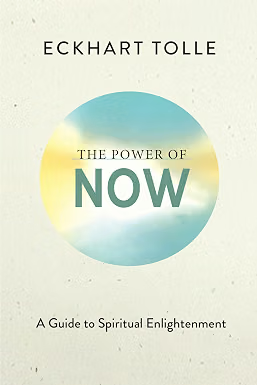
The argument: Most suffering comes from mental time travel, meaning rumination about the past and anxiety about the future. Both are constructions. The present moment is the only place anything actually happens.
The idea worth stealing: Noticing the voice in your head as a voice rather than as you. That gap is the whole practice, and it’s the same move that mindfulness-based therapy teaches in clinical settings.
Who it’s for: People stuck in rumination who haven’t found a way out through more analytical approaches.
Who should skip it: If spiritual language makes you itch, this will be intolerable. Try Feeling Good or Sam Harris instead.
The honest criticism: Tolle presents personal insight as universal metaphysics, and the book has no interest in evidence. Some of the advice, particularly around not resisting your circumstances, is actively bad for someone in a situation they should be leaving.
1997 · 236 pages · 4.15 on Goodreads
The 5 most influential self-help books ever written
Influence and quality are different things. These five shaped the genre, for better and for worse.
Think and Grow Rich by Napoleon Hill (1937) is probably the most influential self-help book ever written and a substantial amount of it is nonsense. Hill claimed to have interviewed Andrew Carnegie and 500 other industrialists. Researchers have found little evidence those interviews happened as described, and Hill’s own life was a series of failed ventures and legal trouble. The book invented the modern manifestation genre. Read it as history.
How to Win Friends and Influence People by Dale Carnegie (1936) created the self-help book as a commercial category and has never really been improved on in its subject area.
The Power of Positive Thinking by Norman Vincent Peale (1952) merged Christian devotional writing with commercial self-help and sold five million copies. Psychologists criticized it heavily at the time for encouraging people to suppress real problems. That criticism was correct, and the book’s DNA is still visible in a lot of contemporary advice.
The 7 Habits of Highly Effective People by Stephen Covey (1989) moved the genre from tips to frameworks and made self-help respectable in corporate settings.
Man’s Search for Meaning by Viktor Frankl (1946) gave the genre a serious intellectual anchor. Every book about purpose since is arguing with it.
Three of those five are books I’d hesitate to recommend as advice. Influence measures reach, not accuracy.
15 more self improvement books worth reading
The Subtle Art of Not Giving a F*ck by Mark Manson (2016)
Argues you have limited capacity to care and should spend it deliberately. Genuinely funny. The profanity is load-bearing marketing.
Daring Greatly by Brené Brown (2012)
Vulnerability as a strength rather than an exposure. Brown’s research on shame is real research. More at brenebrown.com.Buy on Amazon
Getting Things Done by David Allen (2001)
The original productivity system. Fussy, dated in places, and the core insight about getting commitments out of your head and into a trusted system remains correct.
The War of Art by Steven Pressfield (2002)
Short, aggressive book about creative resistance. Either it lands hard or it reads as macho posturing. Both reactions are common.
Quiet by Susan Cain (2012)
Makes the case that introversion is a temperament rather than a deficiency. Useful mostly for permission.
The Body Keeps the Score by Bessel van der Kolk (2014)
Trauma as a physical condition rather than a purely psychological one. Enormously popular and contested within the field. Worth reading with that in mind.
Essentialism by Greg McKeown (2014)
The disciplined pursuit of less. Overlaps heavily with Deep Work. Pick one.
Four Thousand Weeks by Oliver Burkeman (2021)
Anti-productivity productivity book. Argues you will never get on top of everything and should build a life around that fact. The best-written book on this list.
Nonviolent Communication by Marshall Rosenberg (1999)
A specific method for having hard conversations. The example dialogues sound robotic. The method works.
Can’t Hurt Me by David Goggins (2018)
Extreme self-discipline memoir. Effective as fuel, questionable as a model. Goggins is describing a response to trauma that he’s since discussed more openly.
Grit by Angela Duckworth (2016)
Passion and perseverance as predictors of achievement. Has taken replication criticism similar to Mindset, and Duckworth has been reasonably candid about the limits.
The Almanack of Naval Ravikant by Eric Jorgenson (2020)
Compiled tweets and podcast transcripts. Structurally a mess, and several individual ideas about leverage and wealth are sharper than whole books on the subject. Free legally at navalmanack.com.
Mindfulness in Plain English by Bhante Gunaratana (1992)
The clearest instruction manual for meditation in print. No mysticism, no app subscription.
So Good They Can’t Ignore You by Cal Newport (2012)
Attacks “follow your passion” and argues that skill precedes passion. The better argument than most career advice offers.
Tiny Habits by BJ Fogg (2019)
Fogg was Clear’s source. Drier, more academic, and the behavior model is more precise.
Best self improvement books for women
The foundational texts here were written by men, largely for men working in mid-century American offices. That’s fine for what it is. It also means the canon has almost nothing to say about several experiences that shape a lot of women’s lives. These books fill that gap.
Burnout by Emily and Amelia Nagoski (2019) is the most useful of them. The argument is that dealing with a stressor and completing the stress cycle in your body are separate tasks, and that most advice only addresses the first. The chapters on the gap between what women are told to want and what they’re allowed to want are the sharpest writing in the book.
Untamed by Glennon Doyle (2020) is a memoir doing self-help work. It’s polarizing, and the polarization is mostly about whether you find Doyle’s voice compelling or exhausting. If you’ve spent years being agreeable, it functions as permission.
Women Don’t Ask by Linda Babcock and Sara Laschever (2003) covers negotiation and the measurable consequences of not initiating one. The research on how differently identical negotiating behavior is received depending on who does it is uncomfortable and worth knowing.
Radical Acceptance by Tara Brach (2003) addresses chronic self-judgment through Buddhist practice and Western psychology. Gentler than most of this list.
Big Magic by Elizabeth Gilbert (2015) is about making things without waiting for permission or certainty. The mystical framing around ideas as external entities either charms you or doesn’t.
Worth saying plainly: none of these are on this list because they’re for women. They’re here because they cover ground the standard canon skips.
Best self improvement books for men
This corner of the genre has a grift problem. A large share of what markets itself to men is a funnel selling a course, a supplement, or a community. These are the ones that hold up.
Meditations by Marcus Aurelius, covered above, is the best book on male self-discipline ever written and it was written by someone with nothing to sell.
No More Mr. Nice Guy by Robert Glover (2003) addresses a specific pattern of conflict avoidance, approval-seeking, and covert resentment. The writing is plain and the diagnosis is accurate for a lot of men. The relationship advice in the later chapters is weaker than the analysis.
Can’t Hurt Me by David Goggins (2018) works as raw motivation. Take the specific protocols with caution. Goggins damaged his body significantly getting where he got, and he’s said so.
Deep Work by Cal Newport (2016) is the correct book for a man who feels behind at work and has been treating the problem as a motivation issue.
King, Warrior, Magician, Lover by Robert Moore and Douglas Gillette (1990) is Jungian archetype work applied to masculinity. It’s strange, dated, and more interesting than the modern books that borrowed from it without attribution.
Nonviolent Communication by Marshall Rosenberg is on this list too, because the most common complaint I see from men in relationships is an inability to name what they’re feeling before it comes out as anger.
Best self improvement books for students and young adults
Skip the mindset books for now. At 19 the constraint is usually technique and information rather than belief.
Make It Stick by Brown, Roediger, and McDaniel (2014) is the one that changes grades. It explains why rereading and highlighting feel effective and mostly aren’t, and what to do instead, which is retrieval practice, spacing, and interleaving. If you read one book on this list before an exam season, read this.
A Mind for Numbers by Barbara Oakley (2014) covers the same territory for maths and science specifically, plus a useful model of how focused and diffuse thinking alternate. Oakley failed maths as a teenager and later became an engineering professor, which gives the advice some weight.
Atomic Habits by James Clear is the right systems book at this age, because the habits you set up between 18 and 25 compound for a long time.
The Defining Decade by Meg Jay (2012) argues against treating your twenties as a throwaway decade. Some of it is alarmist. The core point about the cost of drifting is sound.
I Will Teach You to Be Rich by Ramit Sethi (2009, updated 2019) is the most useful personal finance book for someone starting out, because it’s built around automating a system once rather than sustaining discipline forever.
So Good They Can’t Ignore You by Cal Newport (2012) is the antidote to being told to find your passion by people who found theirs by accident.
The highest rated self improvement books on Goodreads
| Book | Author | Rating | Ratings |
|---|---|---|---|
| Man’s Search for Meaning | Viktor Frankl | 4.37 | 900,000+ |
| Atomic Habits | James Clear | 4.35 | 1,400,000+ |
| Meditations | Marcus Aurelius | 4.28 | 400,000+ |
| How to Win Friends | Dale Carnegie | 4.22 | 1,000,000+ |
| Deep Work | Cal Newport | 4.19 | 250,000+ |
| Thinking, Fast and Slow | Daniel Kahneman | 4.17 | 600,000+ |
| The 7 Habits | Stephen Covey | 4.16 | 700,000+ |
| The Power of Now | Eckhart Tolle | 4.15 | 350,000+ |
| Mindset | Carol Dweck | 4.09 | 200,000+ |
| Feeling Good | David Burns | 4.06 | 40,000+ |
Two things worth knowing before you use these numbers.
Rating volume matters more than the rating itself. A 4.6 from 8,000 readers and a 4.2 from 900,000 are not comparable. The first has a self-selected audience of people who sought out a niche book. The second has been read by people who were given it, assigned it, or picked it up skeptically. High ratings at high volume are the harder achievement.
And self-help ratings are inflated by timing. People rate these books right after finishing, when the motivation is fresh and nothing has been tested yet. The rating measures how the book felt to read rather than whether anything changed six months later. If Goodreads collected a second rating a year on, this table would look different.
What Reddit actually recommends
Search communities like r/selfimprovement, r/getdisciplined, and r/BettermentBookClub and a fairly consistent picture emerges.
The books that come up constantly are Atomic Habits, Man’s Search for Meaning, Meditations, Deep Work, Feeling Good, and The Body Keeps the Score. Roughly the same set as the list above, which is reassuring.
More interesting is what gets pushback. The Secret and the manifestation genre get openly mocked. Think and Grow Rich gets treated as a historical curiosity rather than advice. The Power of Now splits the room, with one half calling it transformative and the other calling it word salad. Anything associated with a paid course or a YouTube funnel gets flagged fast.
There’s also a recurring thread worth taking seriously, usually titled something like “I read 50 self-help books and nothing changed.” The consensus answer is that consumption replaced action, and reading the next book produced the same feeling of progress as doing the work. That diagnosis is correct, and it’s the reason for the next section.
How to read these books so they actually change something
Reading self-help feels like improving. Your brain treats the intention as partial credit, which is why people can read thirty of these books and behave identically to how they did before.
Here’s what works instead.
One book at a time, and finish it. Running three books at once means none of them reaches the point where you’d act on it. The insight usually shows up when you’ve lived with an idea for a week or two, not when you’ve skimmed it.
Extract one behavior, not ten insights. After finishing, write one sentence: what will I do differently, starting when. Not “be more present” but “no phone in the bedroom, starting tonight.” Everything else in the book was context.
Run it for thirty days before reading the next one. This is the step people skip, and it’s the entire difference between a reading habit and a change. Thirty days is long enough to know whether it fits your actual life.
Take notes about your behavior, not the author’s points. Summarizing what the author said produces a document you’ll never reopen. Writing “this chapter is describing exactly what I do on Sunday nights” produces something you’ll act on.
Reread the good ones. Reading a fourth habit book gives you less than rereading Atomic Habits a year later, when you’ve got a year of failed attempts to hold it against.
The genre encourages the opposite of all of this, because the business model depends on you buying the next book. One book a quarter, applied, beats one a week, forgotten.
Where to read these books free (legally)
A lot of the traffic for these titles is people searching for free PDFs. Most of the sites ranking for those terms are malware farms serving badly scanned files, and the good copies aren’t there. Here’s what actually works.
Public domain titles are genuinely free. Meditations and The Art of War are available in full at Project Gutenberg and in nicely formatted editions at Standard Ebooks. Think and Grow Rich and As a Man Thinketh are public domain in most jurisdictions. These are legal, complete, and better formatted than anything you’ll find on a piracy site.
Your library card covers most of the rest. Libby connects to your local library and lends ebooks and audiobooks free. Hoopla does the same where your library subscribes. Nearly every book on this list is available through one or the other, and holds on popular titles are usually a few weeks.
Open Library lends scanned copies of books that aren’t in print digitally, one borrower at a time, through the Internet Archive.
Audiobook trials. Audible and Spotify both run free trial periods that include at least one credit. If you only want one book read aloud, that’s the cheapest route.
Used copies. These books sold in enormous quantities, which means the secondhand market is flooded. A used copy of The 7 Habits costs less than a coffee at most charity shops and online resellers.
The one thing I’d avoid is any site promising a free PDF of a book published in the last five years. The file is either not the book or not just the book.
Best self improvement books of 2026
Nearly every list ranking for this phrase is the same classics with a new year attached. Atomic Habits is not a 2026 book. Here’s what’s genuinely new this year.
Publisher catalogues point to several notable releases. Nicole LePera, whose How to Do the Work was a major seller, has a book on developmental trauma and reparenting. Arthur Brooks, who writes on happiness for The Atlantic, has one on meaning and later-life fulfilment. Maya Shankar, a cognitive scientist who hosts A Slight Change of Plans, has a book on how people handle identity change. HarperCollins has also pushed a strong self-help slate this year, including work on empathy and neurodivergence from clinicians rather than influencers.
The broader shift is toward clinical credentials. The genre spent the 2010s dominated by bloggers and entrepreneurs, and the current wave leans more on therapists, physicians, and researchers. That’s mostly an improvement, though a PhD on the cover doesn’t guarantee the advice generalizes beyond the author’s caseload.
None of these has been out long enough to earn a place on an all-time list. Ask again in ten years.
Note: verify current publication dates before this goes live — some 2026 book-list aggregators misdate older titles as new releases.
Frequently asked questions
What is the single best self improvement book to start with?
Atomic Habits. It’s practical, it’s short, and the systems it teaches make every other book on this list more likely to stick. If your issue is mood rather than execution, start with Feeling Good instead.
Do self-help books actually work?
Some do, in specific circumstances. Bibliotherapy using CBT-based books like Feeling Good has real trial evidence behind it for mild depression and anxiety. The motivational end of the genre has almost none. Books that give you a procedure tend to outperform books that give you a perspective.
How many self improvement books should I read in a year?
Four, applied, beats twenty skimmed. The limiting factor is never the supply of books.
What’s the difference between self-help and personal development?
Nothing meaningful. Publishers use “personal development” because “self-help” carries a stigma, and bookshops shelve them together.
Are older self-help books still relevant?
The ones about human behavior are, because human behavior hasn’t changed much since 1936. The ones about specific tools and workplaces are not. Carnegie holds up. Chapters about fax machines do not.
Which of these have the best audiobooks?
Can’t Hurt Me, because Goggins interrupts his own narration with commentary, and Four Thousand Weeks, read by Burkeman. Skip audio for Thinking, Fast and Slow and Make It Stick, both of which need you to stop and think.
Are there good self improvement books in other languages?
Most of these have been translated widely, including into Hindi, Spanish, and Arabic. Translation quality varies a lot for the more idiomatic writers. Manson and Goggins lose a fair amount.
Where to start
Don’t read the list. Pick one book that matches the thing currently going wrong, read it this month, and change one behavior before you buy another.
If you can’t decide, it’s Atomic Habits, and my full review of it covers what it gets right and where it oversells.