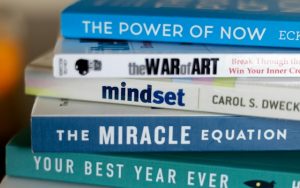
You’ve probably already read a few self-improvement books about habits, productivity, or mindset. The harder part is finding books that also explore meaning, inner growth, self-awareness, and spirituality. This guide breaks down the main types of spirituality self improvement books and helps you choose one based on what you want to explore right now.
Key Takeaways
- Spirituality and self-improvement books explore self-awareness, mindfulness, purpose, personal growth, habits, meaning, and spiritual development.
- Spiritual growth books can use religious, philosophical, contemplative, or secular approaches, so the author’s worldview matters.
- Different books serve different goals, including emotional growth, finding purpose, building habits, developing mindfulness, and exploring consciousness.
- The right book depends on your current goal, beliefs, experience level, and preferred reading style.
- Self-improvement books become more useful when their ideas are turned into reflection, habits, experiments, or deliberate practice.
- Reading slowly and applying one idea at a time can be more useful than rushing through a long list of recommendations.
- Personal growth is individual, so a book that resonates with one reader may not fit another person’s current needs.
Table of Contents
What Are Spirituality Self Improvement Books?
Spirituality self improvement books are books that explore personal growth alongside topics such as self-awareness, meaning, mindfulness, purpose, values, or spiritual development. Unlike conventional self-help books that may focus mainly on productivity, confidence, habits, or career success, these books often ask deeper questions about how you understand yourself and your life.
First, spirituality does not have one universal definition. A spirituality book may be rooted in a religious tradition, meditation, philosophy, contemplative practice, or a more secular exploration of meaning and consciousness. For example, Man’s Search for Meaning approaches purpose through psychology, suffering, and existential questions, while The Power of Now focuses on present-moment awareness and consciousness.
Second, spiritual self-improvement books sit between inner exploration and practical personal development. A book may encourage you to meditate, examine your beliefs, build better habits, understand your emotions, or reconsider what gives your life meaning.
If you’re also interested in conventional personal-development recommendations, you can explore our guide to best self-improvement books → broader self-improvement book recommendations.
Why Should You Read Spirituality Self Improvement Books?
Spirituality self improvement books can give you frameworks for reflection, mindfulness, values, habits, purpose, and personal growth. They cannot guarantee a particular spiritual or psychological outcome, but they can give you ideas and practices to examine in your own life.
First, these books can help you slow down and examine questions that are easy to ignore. For example, someone who feels successful professionally but disconnected personally might benefit more from a book about purpose or meaning than another productivity manual.
Second, interest in spirituality takes different forms. A 2024 Pew Research Center analysis found that 41% of U.S. adults said they had become more spiritual over their lifetime, compared with 24% who said they had become more religious. The survey included 11,201 U.S. adults and did not impose a definition of “spiritual” or “religious” on respondents.
At the same time, spiritual practices are not limited to formal religion. Pew’s 2025 Religious Landscape Study found that 40% of U.S. adults look inward or center themselves weekly or more often, while 23% meditate for spiritual reasons at least weekly.
A good spirituality book gives you something to examine or practice rather than simply something to believe.
What Are the Main Types of Spirituality and Self-Improvement Books?
The main types of spirituality and self-improvement books focus on areas such as mindfulness, purpose, habits, emotional growth, consciousness, faith, and personal philosophy. Knowing the category makes it easier to choose a book that matches your actual goal.
| Category | Main focus | Good starting point |
|---|---|---|
| Mindfulness | Present-moment awareness and meditation | Wherever You Go, There You Are |
| Purpose and meaning | Meaning, suffering, values, direction | Man’s Search for Meaning |
| Habits | Behavior change and consistency | Atomic Habits |
| Consciousness | Thoughts, awareness, inner experience | The Untethered Soul |
| Spirituality | Spiritual principles and personal success | The Seven Spiritual Laws of Success |
| Emotional growth | Self-awareness and emotional patterns | The Untethered Soul |
| Philosophy | Questions about meaning and how to live | Man’s Search for Meaning |
What Are the Best Spirituality Books for Personal Growth?
The best spirituality books for personal growth are those that address the specific area you want to understand or practice. There is no objective single winner because spirituality and personal growth cover very different subjects.
First, The Power of Now by Eckhart Tolle is suited to readers interested in presence, consciousness, and the relationship between attention and thought. Tolle’s work centers on present-moment awareness and what he describes as Presence. Penguin Random House lists The Power of Now among his internationally bestselling books, translated into 52 languages.
Second, The Untethered Soul by Michael A. Singer explores the relationship between your thoughts, emotions, and sense of self. The publisher describes it as a book about moving beyond habitual thoughts and emotional patterns through ideas connected with meditation and mindfulness.
What Are the Best Self-Improvement Books With a Spiritual Focus?
The best self-improvement books with a spiritual focus combine personal development with questions about meaning, awareness, values, or inner life. They vary considerably in how practical, philosophical, or explicitly spiritual they are.
Atomic Habits by James Clear is useful if your main interest is turning personal-growth intentions into consistent behavior. It is not primarily a spiritual book, but its focus on systems, identity, environment, and small behavioral changes can complement a spiritual practice. The publisher reports that the book has sold more than 25 million copies and been translated into more than 60 languages.
For a more explicitly spiritual approach to success, The Seven Spiritual Laws of Success by Deepak Chopra presents seven principles connected with personal success, fulfillment, and spiritual ideas. The book was originally published in 1994 and is categorized by Google Books under self-help, personal growth, success, and spirituality.
For more practical habit guidance, you can also read our Atomic Habits book summary → summary and key ideas from the book.
Which Spirituality Books Are Best for Beginners?
Spirituality books for beginners are usually easiest to approach when they use accessible language and introduce practices gradually. Your best starting point depends on whether you want meditation, consciousness, purpose, or a more explicitly spiritual framework.
Wherever You Go, There You Are by Jon Kabat-Zinn is one option for readers beginning with mindfulness. The book introduces mindfulness meditation as an everyday practice, and the author’s official site describes the 30th-anniversary edition as an accessible introduction to cultivating mindfulness.
The Untethered Soul is another approachable choice for readers more interested in observing thoughts and emotions. Its publisher notes that the book is intended both for people beginning an inward journey and for readers with longer meditation experience.
For beginners looking for purpose rather than meditation, Man’s Search for Meaning offers a very different starting point. Frankl’s book combines autobiographical experience with his ideas about meaning and logotherapy. Beacon Press reports that it has sold more than 16 million copies and been translated into more than 50 languages.
What Are the Best Books for Spiritual Growth and Self-Awareness?
Books for spiritual growth and self-awareness help readers examine their thoughts, values, emotional patterns, beliefs, and sense of identity. The strongest choice depends on whether you prefer practical exercises, philosophical discussion, meditation, or spiritual teaching.
First, The Untethered Soul fits readers who want to investigate their relationship with their inner dialogue. The book asks readers to observe thoughts and emotions rather than automatically treating every internal reaction as an instruction.
Second, The Power of Now suits readers drawn toward present-moment awareness and consciousness. It can be particularly relevant if your interest in self-awareness is connected with learning to pay closer attention to your experience of the present.
For readers who want a more philosophical exploration, Man’s Search for Meaning asks what makes life meaningful under difficult circumstances. Frankl’s approach comes from his experiences as a psychiatrist and concentration-camp survivor and from the development of logotherapy.
You can continue this exploration with our guide to books for self-discovery → self-discovery reading recommendations.
What Books Can Help You Find Purpose and Meaning in Life?
Books about purpose and meaning help you examine what gives your life direction, significance, and personal value. They are especially relevant when you’re questioning your priorities, going through a transition, or trying to understand what matters beyond achievement.
Man’s Search for Meaning is a natural starting point because meaning is central to Viktor Frankl’s psychological approach. Beacon Press describes the book as both a memoir of his experiences in Nazi concentration camps and an exploration of the human search for meaning in adversity.
The Seven Spiritual Laws of Success approaches purpose differently. Instead of focusing primarily on suffering or existential psychology, Chopra presents spiritual principles connected with fulfillment, success, and living in harmony with what he describes as natural laws.
The important distinction is that these books do not answer the same question. Frankl is primarily concerned with meaning, while Chopra presents a spiritual philosophy of success and fulfillment.
For a broader reading list, explore books about finding your purpose → purpose-and-meaning book guide.
What Are the Best Books for Mindfulness and Inner Peace?
Mindfulness books teach forms of present-moment awareness that can be practiced through attention, meditation, reflection, and everyday activities. Some are explicitly secular, while others connect mindfulness with broader spiritual ideas.
Wherever You Go, There You Are is a useful choice for readers who want an accessible introduction to mindfulness meditation. The updated edition retains its focus on bringing mindful awareness into ordinary life rather than treating meditation as something completely separate from daily experience.
The Power of Now takes a more explicitly spiritual approach to presence and consciousness. Its central ideas are concerned with becoming more attentive to the present rather than remaining absorbed in habitual thinking.
If you’re completely new to the subject, our mindfulness books for beginners → beginner mindfulness guide can help you compare different approaches.
How Do You Choose the Right Spirituality and Self-Improvement Book?
Choosing the right spirituality and self-improvement book starts with identifying your current goal, worldview, experience level, and preferred approach to personal growth. A simple selection framework can prevent you from choosing a book simply because it appears on every recommendation list.
First, identify the question you are trying to answer:
- Want more present-moment awareness? Start with mindfulness-focused books.
- Want to understand your thoughts and emotions? Consider consciousness and self-awareness books.
- Want a stronger sense of purpose? Explore meaning and philosophy.
- Want practical behavior change? Choose habit-focused personal-development books.
- Want explicitly spiritual teachings? Look for books that clearly explain their religious or philosophical framework.
Second, consider the author’s worldview. Spirituality is not synonymous with religion, meditation, or self-help. A secular mindfulness book and a book based on a particular religious tradition may both discuss inner growth while making very different assumptions about spirituality.
Third, consider your reading style. A practical reader may prefer exercises and short chapters, while someone who enjoys philosophical reflection may prefer a slower, more conceptual book.
How Can You Get More From Reading Self-Improvement and Spirituality Books?
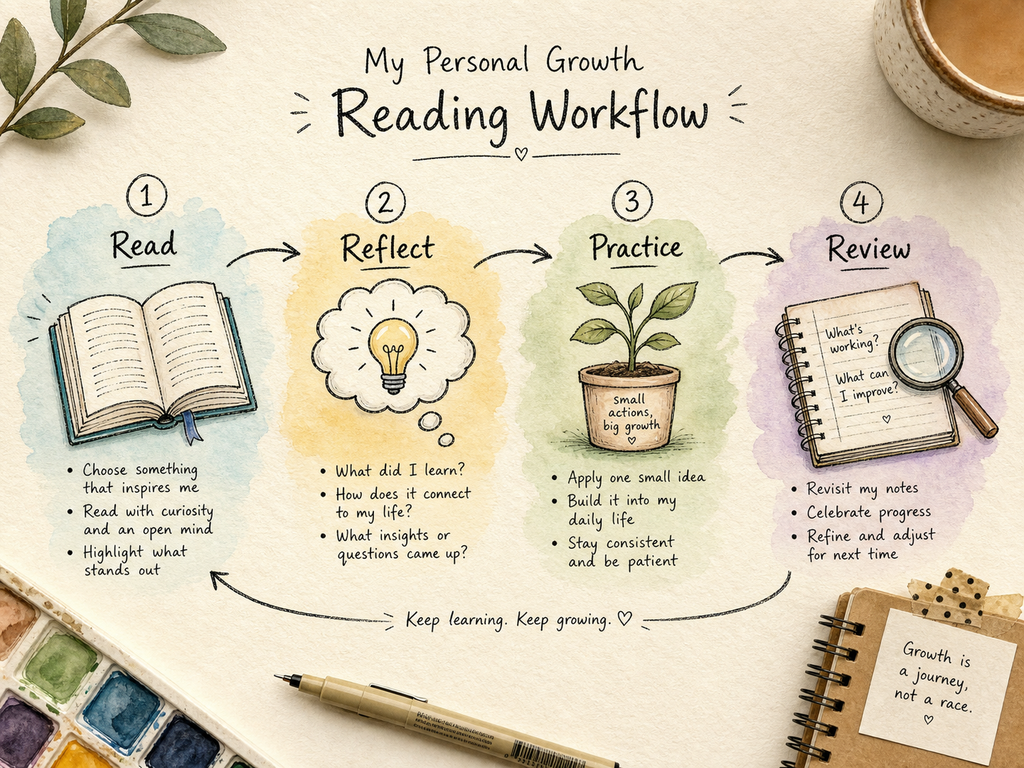
Getting more from a self-improvement or spirituality book involves turning its ideas into reflection, practice, or behavioral experiments. Reading 20 books without applying their ideas may give you more information without necessarily changing how you live.
First, keep a simple reading journal. After each chapter, write down one idea that challenged you, one idea you agree with, and one action you could test.
Second, avoid trying to implement everything simultaneously. For example, if Atomic Habits gives you five useful ideas about behavior change, choose one small habit and practice it for several weeks before adding another. The book itself emphasizes systems, environment, and small behaviors as mechanisms for making habits easier to maintain.
Third, revisit useful passages instead of treating the book as disposable information. Wherever You Go, There You Are, for example, is designed around mindfulness as an ongoing practice rather than a concept that needs to be understood once and forgotten.
[Insert image: A reader using a journal beside a spirituality and self-improvement book | Alt text: “Journal reflections from a spirituality self-improvement book”]
[Internal link: “journaling for self-improvement” → guide to using journaling for personal growth]
What’s Next After Reading a Spirituality or Self-Improvement Book?
The next step after reading a spirituality or self-improvement book is to test its useful ideas in everyday life. A book becomes more practical when its concepts influence what you notice, practice, question, or change.
First, choose one idea rather than creating an entirely new lifestyle overnight. If you read about mindfulness, try five minutes of quiet observation each day. If you read about habits, redesign one part of your environment to make a desired behavior easier.
Second, record what happens. A short journal entry can tell you whether an idea is actually useful in your circumstances.
Third, continue your learning selectively. You might move from The Power of Now into another book about consciousness, or from Atomic Habits into practical material about [how to build better habits → habit-building guide].
Conclusion: Choose a Book That Matches Your Current Season of Growth
The most useful spirituality self-improvement book depends on the question you are trying to explore right now. Books such as The Power of Now, The Untethered Soul, Man’s Search for Meaning, Atomic Habits, The Seven Spiritual Laws of Success, and Wherever You Go, There You Are approach personal growth from different directions.
First, choose according to your goal rather than popularity alone. A book about mindfulness may make more sense when you want greater awareness, while a book about habits may be more useful when you need practical behavior change.
Second, give yourself permission to read slowly. Personal growth is not a competition to finish the most books; it is an opportunity to examine ideas and decide what is useful in your own life.
If you’re ready to continue exploring, browse our guides to [personal growth books → broader personal-development recommendations] and [books about emotional intelligence → emotional-intelligence reading guide].
Written by Kat Theo, Content Creator, Writer, and Founder of Psychology of Success. Kat Theo creates content about mindset, peak performance, self-mastery, and practical personal growth, translating psychological principles into actionable daily habits.
Reviewed by Reviewer information was not provided in the content brief.
Disclaimer: This article was initially drafted using AI assistance. However, the content has undergone thorough revisions, editing, and fact-checking by human editors and subject matter experts to ensure accuracy.
rs and subject matter experts to ensure accuracy.