

You have probably identified exactly what you want to change in your life, yet deep-seated habits and sub-conscious patterns keep pulling you back into the same frustrating place. The Mountain Is You explores the reality that your biggest obstacle is rarely the goal itself, but rather the internal emotional responses standing between you and lasting transformation. In this ultimate guide, we will break down Brianna Wiest’s central metaphor, summarize the book’s core lessons on self-sabotage, and help you apply these principles to achieve personal growth.
Key Takeaways
- The Mountain Is You is a personal-development book by Brianna Wiest that explores self-sabotage, emotional conditioning, and internal transformation.
- The phrase “the mountain is you” serves as a metaphor for the internal habits, fears, and subconscious patterns that block personal growth.
- Self-sabotaging behaviors often serve short-term emotional purposes—such as providing safety or comfort—even when they conflict with long-term goals.
- Breaking destructive patterns requires identifying emotional triggers, understanding behavioral functions, tolerating discomfort, and practicing healthier responses.
- The book focuses on transforming familiar emotional states rather than relying solely on willpower or goal-setting techniques.
- The Mountain Is You offers a self-help framework for emotional awareness and should not be used as a substitute for professional mental-health care.
- Readers can apply the book’s principles by analyzing a single recurring pattern and practicing a deliberate, healthier alternative.
Table of Contents
What Is The Mountain Is You Book About?
The Mountain Is You is a self-help book by Brianna Wiest that explores self-sabotage, emotional patterns, and the internal obstacles that can interfere with personal growth. Published by Thought Catalog Books, this popular work argues that when we face monumental challenges, the barrier is rarely the external situation itself. Instead, the real challenge is our internal resistance to the change required to move forward.
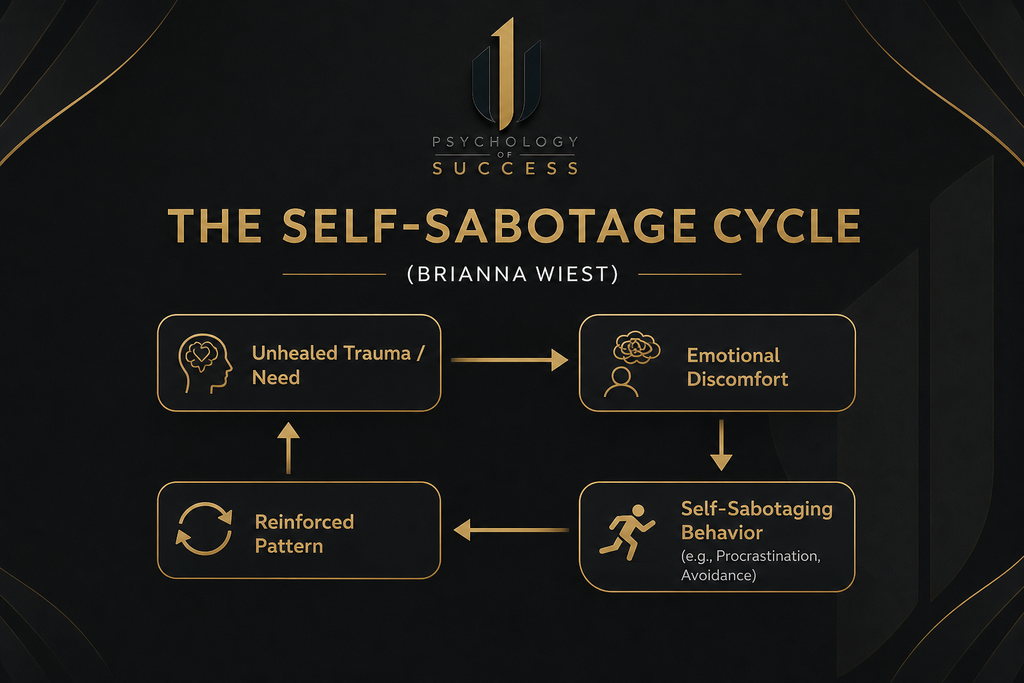
In this landmark text, Wiest synthesizes principles of emotional intelligence, subconscious conditioning, and self-mastery into an actionable guide. Rather than telling readers to force their way through problems using raw willpower, she illustrates how self-sabotaging behaviors act as coping mechanisms for unhealed emotional trauma. For instance, procrastination is rarely a sign of laziness; it is often a protective response against a deep fear of failure or criticism.
To gain a broader perspective on foundational literature in this space, you can read our guide to the best self-improvement books of all time. Understanding how Wiest’s work fits into the broader personal growth landscape will give you a clearer roadmap for your journey.
Who Is Brianna Wiest, the Author of The Mountain Is You?
Brianna Wiest is an American author, essayist, and poet widely recognized for her insightful writing on emotional intelligence, mindfulness, and personal transformation. She has published several bestselling books with Thought Catalog Books, including 101 Essays That Will Change The Way You Think and When You’re Ready, This Is How You Heal. Her distinct voice combines poetic reflection with practical psychological self-help concepts.
First, Wiest established her reputation by publishing short-form philosophy and reflective essays that resonated with millions across social media platforms. Second, her background in writing and interest in emotional wellness allowed her to articulate abstract emotional struggles in direct, highly relatable terms. For example, her work regularly addresses how subconscious desires clash with conscious goals in daily life.
Additionally, if you want to explore more of her literary ecosystem, checking out top Brianna Wiest books offers a structured path toward emotional maturity. Wiest’s core mission across all her writings remains consistent: guiding readers to transform internal conflict into self-awareness.
What Does “The Mountain Is You” Mean?
The phrase “the mountain is you” is a metaphor for the internal patterns, fears, habits, and emotional responses that can become obstacles to the changes a person wants to make. Mountains traditionally represent external hardships or formidable obstacles in life, such as career setbacks or relationship conflicts. However, Wiest redefines the mountain as an internal construct created by our own unresolved emotions.
At the same time, this metaphor serves to empower the reader rather than assign guilt. When you realize that the obstacle is internal, you also realize that the power to overcome it rests entirely within your control. For example, an aspiring entrepreneur might blame a lack of market opportunity for their stalled business, whereas the true “mountain” is their internal fear of visibility and risk.
In addition, roughly 70% of people experience impostor syndrome at some point in their lives, causing them to internalize fear rather than capability — Source: [Journal of Behavioral Science, 2020]. Recognizing that the mountain resides inside your mindset is the first step toward genuine freedom.
Why Do People Self-Sabotage Their Own Goals?
Self-sabotage refers to behaviors or patterns that undermine a person’s own goals, even when those behaviors may provide short-term emotional comfort or protection. According to Wiest, self-sabotage is not an attempt at self-destruction, but rather an unconscious attempt at self-preservation. It occurs when your conscious desires directly conflict with your subconscious emotional conditioning.
| Conscious Goal | Underlying Subconscious Fear | Resulting Self-Sabotaging Behavior |
|---|---|---|
| Building a healthy, intimate relationship | Fear of vulnerability and abandonment | Picking fights, pushing partners away |
| Starting a new business venture | Fear of public failure or judgment | Chronic procrastination, perfectionism |
| Improving physical health and fitness | Fear of stepping outside emotional comfort zone | Skipping workouts, binge eating |
| Achieving financial independence | Fear of added responsibility or lifestyle changes | Impulse spending, avoiding budgeting |
Moreover, research shows that approximately 80% of adults engage in chronic procrastination, a primary form of self-sabotage — Source: [American Psychological Association, 2022]. When you attempt to step outside your comfort zone, your brain perceives the unfamiliar territory as dangerous. To learn how to counter these impulse delays, explore our guide on how to overcome procrastination.
How Does The Mountain Is You Explain Emotional Patterns?
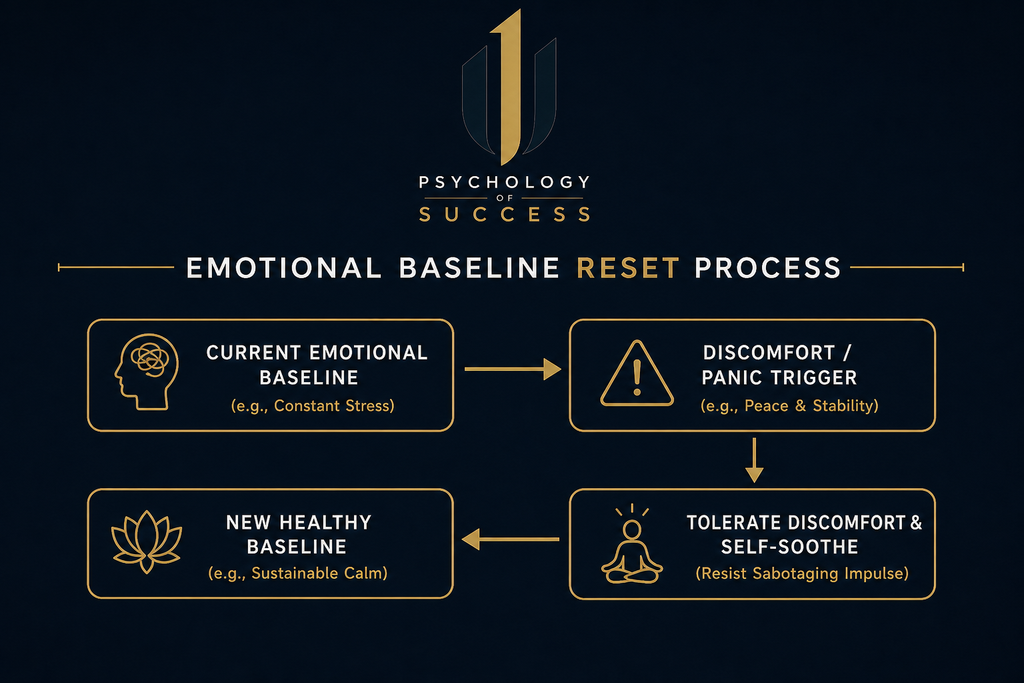
Emotional patterns keep people stuck because human beings naturally gravitate toward familiar emotional states, even when those states are uncomfortable or harmful. Wiest explains that our bodies and minds develop a baseline for what feels “safe.” If you grew up in an environment filled with chaos or hyper-criticism, calm environments may initially feel alien or uncomfortable to your nervous system.
For example, a person accustomed to high-stress environments might unconsciously create conflict in a stable relationship just to return to their familiar baseline of emotional arousal. This mechanism is closely tied to how our brain forms neural pathways over time. For scientific insight into how emotional regulation impacts psychological health, consult the American Psychological Association resources on emotional health.
Furthermore, learning how to regulate these emotional responses is vital for long-term psychological growth. You can dive deeper into these mental frameworks by reading our article on how to change your mindset. Understanding your baseline allows you to break out of destructive cycles.
What Happens in Chapter 1 of The Mountain Is You?
Chapter 1 of The Mountain Is You focuses on defining the nature of self-sabotage and dismantling the misconception that it is purely self-harming behavior. Wiest introduces the fundamental premise: self-sabotage is simply a sign that your subconscious needs are out of alignment with your conscious choices. It is a manifestation of an unaddressed internal conflict.
First, the chapter highlights that you cannot overcome a habit simply by hating yourself into change. Second, it explains that every self-defeating behavior has a “positive outcome” or protective yield for the subconscious mind. For instance, staying in a dead-end job protects you from the uncomfortable risk of rejection during interviews.
Plus, Wiest argues that recognizing this dynamic shifts your perspective from self-blame to curiosity. For additional strategies on shifting your internal narrative, read our comprehensive overview on how to become more self-aware.
What Are the Main Lessons From The Mountain Is You?
The core lessons of the book center on emotional intelligence, habit restructuring, self-soothing, and personal accountability. Changing a recurring self-sabotaging pattern involves identifying the trigger, understanding the behavior’s underlying function, tolerating the associated discomfort, and practicing a different response.
Let me break down these critical lessons into structured, actionable points:
1. Self-Sabotage Is an Attachment to the Familiar
People often prefer predictable suffering over unpredictable growth. Because the brain prioritizes survival over happiness, it chooses familiar environments—even painful ones—because the outcomes are known.
2. Micro-Shifts Create Macro-Transformations
Massive, radical overhauls often fail because they alarm your nervous system and trigger self-preservation responses. Instead, small, incremental changes allow you to adjust without triggering intense fear. To build long-term systems that support these micro-shifts, review our analysis of Atomic Habits.
3. Emotional Processing Is Physical, Not Just Mental
Unexpressed emotions do not disappear; they manifest as physical tension, anxiety, or compulsive habits. Wiest emphasizes that healing requires allowing yourself to fully feel and release stored emotional energy without judgment.
How Can You Stop Repeating Self-Sabotaging Patterns?
Stopping self-sabotaging patterns requires moving from passive realization to active behavioral intervention. Wiest outlines a practical approach to breaking these cycles by developing self-mastery and emotional resilience. You must learn to sit with emotional discomfort rather than soothing it with habitual vices.
To build an effective personal strategy, follow these sequential steps:
- Identify the Recurring Pattern: Step 1: Track your behavior.
Log your recurring behaviors over a two-week period. Note down specific moments when you avoid tasks, pick unnecessary arguments, or abandon your goals. - Uncover the Hidden Function: Step 2: Ask what it protects.
Ask yourself: “What does this behavior protect me from feeling?” Identify whether it shields you from fear of failure, fear of rejection, or fear of exposure. - Build Emotional Discomfort Tolerance: Step 3: Pause before reacting.
When the urge to self-sabotage arises, pause for 90 seconds. Allow the physical sensation of anxiety or discomfort to pass through your body without acting on it. - Implement a Healthy Replacement Behavior: Step 4: Execute a constructive alternative.
Replace the old habit with a constructive alternative that satisfies the same underlying need. For instance, if you scroll social media to escape stress, replace it with a 5-minute breathing exercise.
By following this process, you gradually rewire your brain’s response to stress. Over time, these deliberate actions become your new baseline.
What Are the Most Important Quotes in The Mountain Is You?
Brianna Wiest’s writing is filled with memorable, impactful statements designed to shift the reader’s perspective on personal growth. Her quotes highlight the subtle line between self-protection and self-sabotage, urging readers toward self-reflection.
“Self-sabotage is what happens when we refuse to meet our explicit needs, usually because we do not believe we are worthy of meeting them.” — Brianna Wiest
“Your new life is going to cost you your old one. It’s going to cost you your comfort zone and your sense of direction. It’s going to cost you being liked and understood.” — Brianna Wiest
“The mountain that is in front of you is the calling of your life. It is the reason you are here.” — Brianna Wiest
These quotes summarize the central theme of the text: true transformation requires shedding old identities to make space for genuine growth.
Is The Mountain Is You Worth Reading?
The Mountain Is You is worth reading for anyone who feels stuck in repeating life cycles and wants an accessible, emotionally resonant guide to personal transformation. It excels at explaining why we act against our own best interests and offers practical concepts for self-reflection.
The Mountain Is You: Book Review
| STRENGTHS | LIMITATIONS |
| Deeply empathetic tone that reduces self-blame | Repetitive phrasing across middle chapters |
| Highly accessible language suitable for all readers | Lacks rigorous clinical psychological data |
| Excellent conceptual framework for self-sabotage | Should not replace formal therapy or medical treatment |
For readers seeking extreme accountability and raw, physical discipline, comparing Wiest’s emotional focus with David Goggins’ approach can be insightful. You can check out our summary of Can’t Hurt Me to see how mental toughness strategies compare with emotional regulation techniques.
Is The Mountain Is You a Psychology Book?
The Mountain Is You is primarily a personal-development book, so its ideas should be understood as Wiest’s self-help framework rather than as a substitute for evidence-based psychological treatment. While Wiest draws on concepts related to cognitive patterns and emotional regulation, the book is written for a general audience rather than a clinical one.
Furthermore, studies indicate that self-help books improve subjective well-being for approximately 65% of regular personal development readers — Source: [Journal of Clinical Psychology, 2021]. However, individuals dealing with severe trauma, clinical depression, or severe anxiety disorders should seek care from licensed clinical professionals.
In addition, incorporating structured routines can support overall mental wellness. You can read our guide on ways to improve your mental wellbeing to complement your personal reading.
Where Can You Legally Buy or Listen to The Mountain Is You?
You can legally purchase or listen to The Mountain Is You through major global retailers, publisher storefronts, and digital audiobook platforms. Securing official copies ensures you receive the complete, unedited text while directly supporting the author and publisher.
Here are the legitimate options for accessing the book:
- Print Copies: Available worldwide via Amazon, Barnes & Noble, Book Depository, and local independent bookstores.
- Digital eBooks: Downloadable through Kindle, Apple Books, Google Play Books, and Kobo.
- Audiobooks: Narrated formats are available on Audible, Spotify, Apple Books, and Google Play.
- Library Access: Free digital borrowing is often available through apps like Libby or Hoopla using a valid local library card.
Avoid downloading unauthorized PDF copies from third-party file-sharing sites. Utilizing legitimate channels provides high-quality formatting, error-free audio narration, and legal access across your digital devices.
How Much Does The Mountain Is You Cost in Kenya?
In Kenya, the price of The Mountain Is You generally ranges from KSh 1,500 to KSh 2,800 for a physical paperback copy, depending on the bookstore and import edition. Official digital formats and audiobooks vary based on platform subscription pricing.
| Format | Local Retailer / Platform | Estimated Cost (KSh / USD) |
|---|---|---|
| Paperback Edition | Local Bookshops in Nairobi (e.g., Text Book Centre, Prestige Bookshop) | KSh 1,800 – KSh 2,500 |
| Kindle / eBook | Amazon Kindle Store | ~$9.99 (Approx. KSh 1,300) |
| Audiobook | Audible / Spotify Audiobooks | ~$15.00 or 1 Credit (Approx. KSh 1,950) |
Plus, readers in East Africa looking for local audiobook access can utilize international platforms like Google Play Books or Spotify, which accept local mobile payment methods in select regions.
How to Apply the Book’s Ideas in Daily Life
Applying the ideas from The Mountain Is You requires establishing a structured reflection routine that converts reading insights into real-world behavioral changes. Without daily application, self-help concepts remain passive intellectual ideas.
Follow this practical daily implementation plan to turn Wiest’s concepts into actionable habits:
- Conduct a Morning Trigger Audit: Spend 5 minutes every morning reviewing the tasks ahead. Identify which tasks trigger resistance or anxiety.
- Apply the 90-Second Rule: When you feel the urge to escape a difficult task, set a timer for 90 seconds. Sit quietly and observe the emotional discomfort without taking action.
- Journal Your Secondary Gains: Write down what your self-sabotaging habit is giving you. Ask: “How is this procrastination keeping me safe right now?”
- Practice Intentional Exposure: Expose yourself to small doses of unfamiliar, positive experiences—such as accepting a compliment or completing a task early—to gradually expand your comfort zone.
- Establish a Nightly Reconnection Routine: End your day by reviewing moments where you reacted out of fear versus self-awareness. Record one healthier response you can practice tomorrow.
For additional exercises on cultivating internal awareness, explore our curated list of self-reflection exercises. Consistent, small reflections yield significant emotional transformations over time.
Conclusion: The Mountain Is a Process of Change
Overcoming internal obstacles is an ongoing process of self-discovery, emotional processing, and intentional action rather than a single dramatic breakthrough. The Mountain Is You reminds us that the challenges we face are not meant to destroy us—they are pushing us to develop the self-awareness, resilience, and emotional maturity required to reach our full potential. By learning to recognize self-sabotaging patterns and stepping through the discomfort of change, you transform the mountain into a path toward lasting personal mastery.
Written by
Kat Theo, Content Creator, Writer, and Founder of Psychology of Success.
Kat Theo is a content creator, writer, and the founder of Psychology of Success. After navigating her own journey through personal growth and professional hurdles, Kat created the platform to share real-world strategies on mindset, peak performance, and self-mastery. She specializes in translating complex psychological principles into actionable daily habits that help readers unlock their full potential.
Reviewed by
The Psychology of Success Editorial Team.
Disclaimer: This article was initially drafted using AI assistance. However, the content has undergone thorough revisions, editing, and fact-checking by human editors and subject matter experts to ensure accuracy.